TDLAS and QF analyzers
Proven technology for concentration measurement in gas
F
L
E
X
Simple products
Easy to select, install and operate
Technical excellence
Simplicity
Standard products
Reliable, robust and low-maintenance
Technical excellence
Simplicity
High-end products
Highly functional and convenient
Technical excellence
Simplicity
Specialized products
Designed for demanding applications
Technical excellence
Simplicity
FLEX selections
Technical excellence
Simplicity
Fundamental selection
Meet your basic measurement needs
Technical excellence
Simplicity
Lean selection
Handle your core processes easily
Technical excellence
Simplicity
Extended selection
Optimize your processes with innovative technologies
Technical excellence
Simplicity
Xpert selection
Master your most challenging applications
Technical excellence
Simplicity
Compare
Measuring principle
TDLAS
Analyte and measurement ranges
H2S (Hydrogen sulfide):
Hazardous area approvals
ATEX / IECEx /UKEx Zone 1
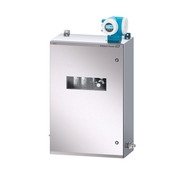
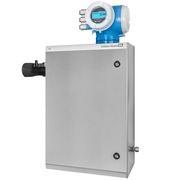
J22 TDLAS gas analyzer
Proven technology for accurate and reliable measurement of H2 O in natural gas, biomethane (RNG), carbon dioxide (CCUS), and hydrogen
Measuring principle
TDLAS
Measured variables
Concentration
Hazardous area approvals
ATEX / IECEx /UKEx Zone 1
Measuring principle
Quenched Fluorescence
Measured variables
Concentration
Hazardous area approvals
ATEX / IECEx - Zone 2
Measuring principle
TDLAS
Measured variables
Concentration
Hazardous area approvals
CSA Class I, Division 2
Measuring principle
TDLAS
Measured variables
Concentration
Hazardous area approvals
IECEx / ATEX / CNEx / KCs / CCOE / JPNEx Zone 1
Measuring principle
TDLAS
Measured variables
Concentration
Hazardous area approvals
TDLAS and QF analyzers
Our product finder helps you to find the right analyzer for your gas concentration measurement needs.
About TDLAS and QF analyzers
TDLAS analyzers utilize a laser absorption spectroscopy technique to reliably measure the concentration of analytes (H2 O, H2 S, and CO2 ) in process gas streams. Similarly, quenched florescence (QF) analyzers measure oxygen from trace to percent levels in gas streams. These optical techniques have revolutionized online gas analysis for quality control and process control while reducing operational costs and maximizing process uptime. To learn more, explore our product offerings below.
Quenched fluorescence: O2 measurements for gas applications
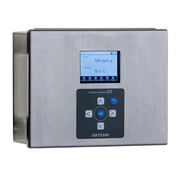
No competing system measures oxygen in natural gas better and faster than our OXY5500 analyzer. They are demonstrably faster, more accurate, more stable, immune to H2 S and other contaminants, and require very little maintenance.
TDLAS: Accurate and reliable gas concentration analysis
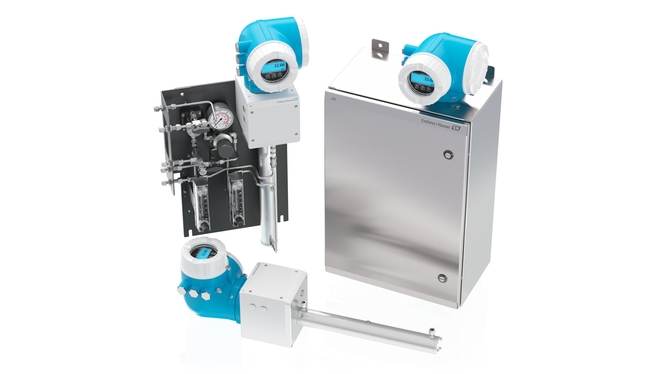
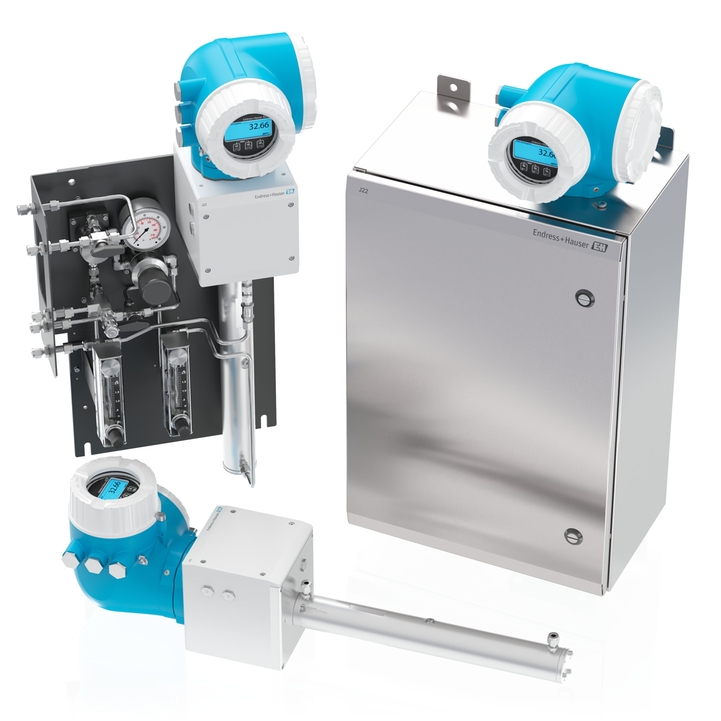
Our portfolio of TDLAS analyzers enable on-line, real-time measurement of H2 O, H2 S, and CO2 in natural gas pipelines, natural gas processing and LNG plants, refineries, and petrochemical processes. Our expertise in this field is underscored by our extensive portfolio of patents.
©Endress+Hauser
Tunable diode laser absorption spectroscopy (TDLAS)
Detecting and measuring the concentration of analyte molecules in process gas streams is critical to meeting quality standards and preventing contamination. Our TDLAS design allows measurements to be performed with zero contact between the process gas sample and critical analyzer components. The non-contact nature of the measurement protects the analyzer, enables rapid response and reliable measurements over long time periods, and eliminates the need for recalibration and constant maintenance.
Quenched fluorescence (QF)
Quenched fluorescence (QF) or fluorescence quenching technology is a reliable method to measure O2 levels in natural gas. Unlike galvanic cells typically used for trace O2 measurement, QF is practically immune to high levels of H2 S, CO2 , and H2 O present in natural gas.
Benefits
No interference: Not affected by H2 S or other sulfursReal-time results: Fast and continuous measurement with excellentEasy to operate: No moving parts, simple operation Low operational costs: No consumable chemicalsExceptional metrology: Low ppmv measurements with high precision
Downloads
Explore additional resources
TDLAS and QF analyzers application guide
Follow this guide to find out what TDLAS and QF technology application notes are available for the Oil & Gas and Chemical industries.
Download
TDLAS and QF analyzers technology guide
TDLAS and QF analyzers technology guide - Principle of operation, configurations, and certification information
Download
Frequently asked questions (FAQs)
How does TDLAS work?
Tunable diode laser absorption spectroscopy (TDLAS) measures gas concentration by directing a narrow-band infrared laser through a sample and detecting how much light is absorbed at a wavelength unique to the target molecule. By comparing the measured absorption to the molecule’s known spectral fingerprint, the analyzer calculates gas concentration in real time. Because it targets specific molecular absorption features, TDLAS provides fast, selective measurement of compounds such as H₂O, H₂S, and CO₂ with minimal interference from other gases.
What is quenched fluorescence (or fluorescence quenching) oxygen sensing?
Quenched fluorescence (QF) (or fluorescence quenching) is an optical oxygen measurement method in which a sensing material is illuminated with light and emits a fluorescent signal. Oxygen molecules interact with the excited sensing material, altering the emitted light in a predictable way. By analyzing these changes, the analyzer determines oxygen concentration continuously and in real time. Because the measurement is based on optical properties rather than consumable electrochemical components, the technology is well suited for long-term oxygen monitoring in industrial gas applications.
What is a moisture analyzer?
A moisture analyzer is a process instrument that monitors the amount of water vapor present in a gas stream and verifies that moisture specifications are met. It is commonly used in natural gas processing, transmission, storage, and distribution to help operators maintain product quality, protect equipment, and comply with pipeline or custody-transfer requirements. By continuously tracking moisture levels, operators can help reduce the risk of corrosion, hydrate formation, water condensation, and off-specification gas, while also monitoring dehydration performance and identifying process upsets. Depending on the application, moisture analyzers may report water concentration or water dew point to support process monitoring, quality control, and regulatory compliance.
Why is H2 S measured in natural gas?
Hydrogen sulfide (H₂S) is measured in natural gas because it is a corrosive contaminant that can damage pipelines, vessels, valves, and other processing equipment, particularly in the presence of water, carbon dioxide, and oxygen. H₂S can contribute to conditions that promote hydrate formation and corrosive acids, increasing risks to asset integrity and gas transmission reliability. H2 S is also harmful to people at surprisingly low concentrations. As a result, pipeline tariffs, custody transfer requirements, and gas sales agreements typically place strict limits on allowable H₂S concentrations to protect the public, protect infrastructure, and ensure gas quality specifications are met. Continuous H₂S measurement helps operators verify compliance, prevent corrosion-related failures, and maintain safe, reliable gas production, processing, and transportation.
Why does oxygen measurement matter in natural gas streams?
The presence of oxygen (O2 ) typically indicates a leak allowing small amounts of air into the pipeline. It is an undesirable contaminant in natural gas because it can contribute to corrosion, accelerate degradation of process equipment, and interfere with downstream gas processing operations. Even at low concentrations, oxygen can affect gas quality, increase operational risks, and create challenges in applications such as gas sweetening, storage, transportation, liquefaction, and hydrogen blending. For these reasons, contractual agreements specify the maximum allowed O2 concentrations. Continuous oxygen measurement helps operators verify gas quality specifications, monitor process performance, and identify air ingress or other contamination events before they impact operations.
Which TDLAS analyzers are approved for Class I Division 1?
Class I Division 1 is a hazardous-area classification used where flammable gases or vapors may be present during normal operation. Endress+Hauser offers several TDLAS analyzers for these environments, including the SS2100 , J22 , and JT33 , with configurations carrying Class I, Division 1 and related hazardous-area approvals. Depending on the model, these approvals have been achieved through intrinsically safe, explosion proof, and other certified protection methods designed for operation in hazardous gas-processing and natural gas applications. Always verify the specific certification and approval code for the intended installation.
What does intrinsically safe mean vs. explosion proof for a gas analyzer?
Intrinsically safe (IS) and explosion-proof are two different methods of preventing ignition in hazardous areas. Intrinsically safe equipment limits the electrical and thermal energy available in the circuit so that a spark or hot surface cannot ignite a flammable atmosphere, even under fault conditions. This protection method requires certified energy-limiting barriers, such as Zener barriers or galvanic isolators, between safe and hazardous areas. In contrast, explosion-proof equipment is designed to contain an internal ignition within a robust enclosure, preventing flames or hot gases from escaping and igniting the surrounding atmosphere. Both approaches are widely used in gas analysis applications, but intrinsically safe systems prevent ignition by energy limitation, while explosion-proof systems prevent ignition from spreading by containment.
How often does a TDLAS gas analyzer need calibration?
Many modern TDLAS analyzers, including the J22 and JT33 , are factory calibrated and typically do not require routine field recalibration. The laser wavelength reference and optical measurement system are designed for long-term stability, resulting in minimal drift over the life of the analyzer. Instead of recalibration, users commonly perform periodic validation checks with certified gas standards to verify analyzer performance.
What does it cost to run a TDLAS gas analyzer?
The cost to operate a TDLAS gas analyzer is typically driven by maintenance, validation activities, utilities, and any application-specific service requirements rather than by routine consumables. Because TDLAS uses an optical measurement principle, it does not rely on regularly replaced sensing elements, chemical reagents, electrolyte cells, or colorimetric tapes that are required by some alternative technologies, helping reduce ongoing operating costs and maintenance burden. Calibration and verification requirements depend on the application, site quality procedures, and regulatory requirements, while expected service life and spare-parts needs vary with the installation environment and operating conditions. When evaluating total cost of ownership, users should consider maintenance labor, validation practices, spare parts, consumables, service support, sample-system upkeep, and potential process downtime in addition to the initial analyzer purchase price.
Show more
Show less
We value your privacy
We use cookies to enhance your browsing experience, collect statistics to optimize site functionality, and deliver tailored advertisements or content.
By selecting "Accept all", you consent to our use of cookies.cookie policy .
Customize
Accept only essential
Accept all