Decarbonization: Your strategy for net-zero emissions in the process industries
Decarbonization is no longer a choice - it is the strategy for the future of the process industries: While sectors like chemicals, steel and oil & gas face a tough net-zero path, every operation has a major opportunity to reduce its carbon footprint

In brief
- Dual challenge: Essential process industries (e.g., chemicals, steel, cement, power) must address the high energy intensity of their operations alongside inherent process emissions.
- Four cornerstones: Achieving net-zero relies on a clear strategy built around four pillars: process optimization, clean fuels, renewable energy and circular economy.
- Targeted reduction: Success starts with minimizing waste and direct emissions, leveraging technologies like CCUS (Carbon Capture, Utilization and Storage).
- Shift to clean energy: A necessary transition involves adopting fuels like green hydrogen and integrating renewable energy sources through electrification.
- Phased strategy: Implementation should follow a phased approach to manage risk, ensure continuous learning and build momentum toward decarbonization success.
- Collective action: Accelerating the transition requires strong collaboration across the value chain and leveraging the expertise of instrumentation and technology providers.


What is decarbonization?
Decarbonization is the process of reducing the environmental impact of carbon dioxide emissions into the atmosphere. It is about cutting emissions, capturing carbon, optimizing process efficiency and switching to alternative fuel sources. More than a trend, it is a critical answer to climate change, fueled by greenhouse gas emissions. Therefore, even though some industries are inherently more carbon-intensive than others, each process industry holds potential for impactful mitigation. Indeed, industrial decarbonization has become an issue across all business sectors.
Pollution-related questions are so urgent, that is has become a crucial global challenge which demands immediate and decisive actions to meet environmental imperatives related to climate change, including net zero emissions targets, set by international consensus such as the Paris Agreement.
Ready to take up with the challenge of net-zero and upgrade your company carbon footprint reduction? This article cuts through the complexity, showing you the practical decarbonization methods and the vital role of technology in process industries.
How do the most carbon-intensive processes impact industrial decarbonization goals?
Several industries face unique challenges in their pursuit of decarbonization because of the inherent carbon intensity of their core processes. These include:
- Chemicals and petroleum refining: The refining process, particularly the production of hydrogen via steam methane reforming (SMR) of natural gas, is a major source of carbon dioxide emissions. This hydrogen is crucial for various processes, including hydrotreating, which removes sulfur and other impurities from refined products. This same process is also used for manufacturing ammonia used in fertilizer production and for other important manufacturing processes.
- Cement and lime manufacturing: The production of cement and lime involves calcination, a high-temperature process that releases carbon dioxide as a byproduct. The prevalent use of fossil fuels, such as coal and petroleum coke, in these processes exacerbates their carbon footprint.
- Iron and steel manufacturing: The transformation of iron ore into iron and steel, relying heavily on blast and basic oxygen furnaces, releases significant amounts of carbon dioxide. This is further compounded by the energy-intensive nature of subsequent processes, such as continuous casting, hot rolling and other forming operations.
- Food and beverage: From agriculture and ingredient sourcing to processing, packaging and distribution, the food and beverage sector relies heavily on fossil fuels at various stages, contributing to its overall carbon footprint.
These industries, though fundamental to modern society, represent a significant portion of global greenhouse gas emissions. In the United States alone, they account for over 75% of total industrial carbon dioxide emissions.
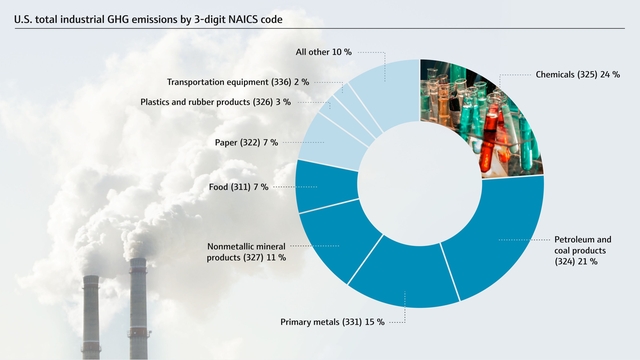
Industries significantly contribute to global greenhouse gas emissions.
Insights
The chemicals and petroleum, cement and lime, iron and steel, and food and beverage industries account for over 75% of total industrial carbon dioxide emissions.
Source: ourworldindata.org
Addressing these emissions is not only an environmental imperative, but also crucial for fulfilling environmental, social and governance (ESG) corporate commitments, and ensuring long-term economic sustainability.
Navigating the intertwined challenges of energy intensity and process emissions
Adding another layer of complexity, many of these carbon-intensive processes are also highly energy-intensive. This creates a dual challenge: reducing emissions from the processes themselves, while decarbonizing the energy sources used to power them.
Refineries, for example, require enormous amounts of energy for processes like hydrocracking, atmospheric distillation and catalytic cracking. The dependence on fossil fuels for these energy needs further amplifies the overall processes’ environmental impact.
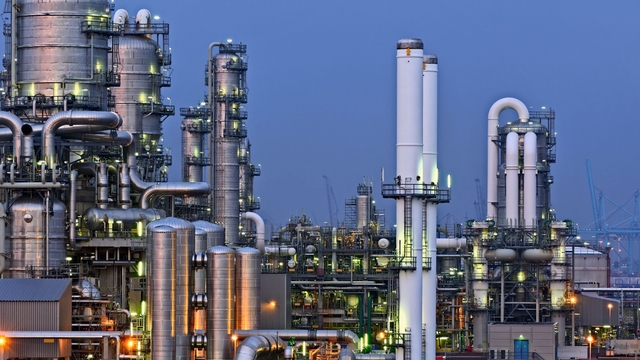
Modern refineries offer many opportunities for decarbonization.
Cement and lime production relies heavily on rotary kilns for a process called calcination, where limestone and other minerals are heated to high temperatures. This releases significant amounts of carbon dioxide and a plant’s age plays a significant role in efficiency. Older installations often lack advanced preheating systems, resulting in lower heat recovery and overall reduced energy and process efficiency.
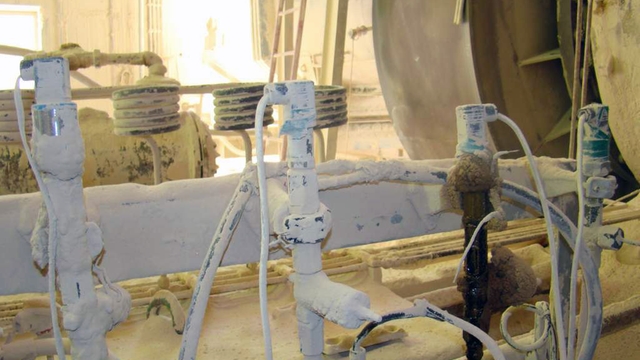
To increase energy efficiency, cement plant raw materials can be preheated prior to entering the kiln.
Iron, steel and other metals production processes similarly demand massive energy inputs for heating, melting and shaping, often relying heavily on fossil fuels like natural gas and coal. To effectively address these intertwined challenges, process industries must adopt a comprehensive decarbonization strategy built on four cornerstones, each highlighting focal points for achieving net-zero operations.
Four cornerstones for a robust decarbonization strategy
Strategy
-
Minimizing carbon emissions through process optimization
The first cornerstone focuses on minimizing or eliminating direct carbon dioxide process waste byproducts. This often requires an operational paradigm shift, embracing innovative technologies. Process optimization typically encompasses fine-tuning existing operations to minimize energy consumption and waste generation. This can be achieved through advanced process control systems, data analytics and implementing best practices for resource utilization. Exploring and implementing alternative technologies that are inherently less carbon-intensive is also critical. This can include shifting toward renewable electrified energy sources where feasible, utilizing more efficient equipment and implementing carbon capture, utilization and storage (CCUS) technologies for unavoidable emissions. The primary aim of CCUS, for example, is to prevent carbon dioxide release to the atmosphere by collecting and storing process offgas. In some cases, fundamental process redesign might be necessary to significantly reduce emissions. This can comprise transitioning to entirely new production methods, utilizing different raw materials or exploring alternative chemistries that minimize or eliminate carbon dioxide generation.
-
Adopting clean fuels
The second cornerstone focuses on transitioning away from fossil fuels and embracing cleaner alternatives, such as hydrogen, for energy generation to help decarbonize the process industries. Green hydrogen is produced through electrolysis using renewable energy sources, providing a completely carbon-free fuel source. It holds immense potential for various applications within the process industries, including replacing natural gas in high-temperature processes and serving as a feedstock for producing low-carbon chemicals and fuels. Biofuels are derived from renewable sources like agricultural waste, wood residues and other organic matter, offering a more sustainable alternative to fossil fuels. While their combustion releases carbon dioxide, these processes are considered carbon-neutral because the carbon was originally absorbed from the atmosphere during the feedstock's growth.
-
Decarbonizing energy consumption
The third cornerstone stresses a transition to cleaner energy sources for all aspects of energy consumption, from powering machinery and equipment, to providing heat for various processes. Integrating renewable energy sources, such as solar, wind, hydro and geothermal, into the energy mix is crucial. This can consist of on-site generation through solar farms or wind turbines, procuring renewable energy from utilities and participating in renewable energy purchase agreements. Wherever feasible, electrification can also significantly reduce emissions. This is particularly relevant for processes like heating and transportation, where electric alternatives are becoming increasingly viable and cost-effective.
-
Reducing waste and products for circularity and efficiency
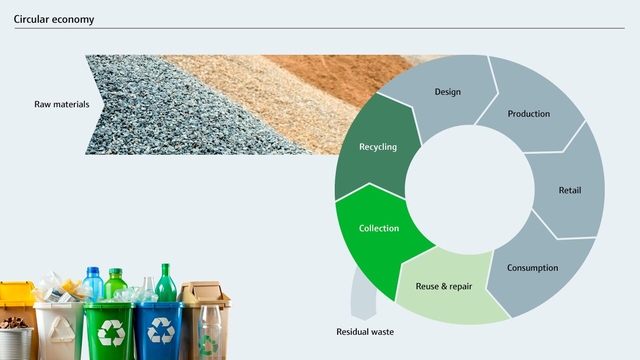
The fourth cornerstone highlights the importance of minimizing waste throughout the entire production process to reduce both energy consumption and emissions. Implementing advanced process control systems and data analytics, driven by data provided from instrumentation, can help identify inefficiencies and optimize processes to minimize waste generation at the source. Furthermore, waste streams can be repurposed into valuable products or feedstocks for other applications, contributing to a circular economy and reducing the environmental burden of byproducts. Implementing this cornerstone, organizations facilitate a mindset shift from the linear "take-make-dispose" model toward the principals of circular economy, which focus on reusing, repurposing and keeping resources in circulation for as long as possible. This philosophy is essential for achieving long-term sustainability.
Building momentum for long-term success with a phased approach
The journey toward decarbonizing complex process industries is best navigated with a phased approach, focusing on achieving incremental yet impactful improvements over time. This allows for:
- Continuous learning and optimization, where each phase provides valuable data and insights that can be used to refine subsequent strategies. This ensures continuous improvement and optimization of decarbonization efforts.
- Manageable investments and risk mitigation, which allows for strategic investment allocation and minimizes financial risks associated with large-scale, untested technologies.
- Building momentum and demonstrating progress. Success during initial phases builds internal and external confidence, attracting further investment and accelerating the transition to a net-zero future.
For example, many companies taking steps toward decarbonization are currently leveraging lower-carbon alternatives to conventional fossil fuels, such as natural gas, known as transition fuels. Natural gas emits roughly half the carbon dioxide of coal during combustion, and it can be readily shipped as liquified natural gas (LNG) to regions without native natural gas resources as a bridge to fully-decarbonized energy sources.
Accelerating the transition with collaboration and technological advancement
Decarbonizing process industries is not a solitary endeavor, but is instead a collective effort requiring collaboration and knowledge sharing across industries, value chains and technology providers. Open collaboration around successful strategies, challenges encountered and lessons learned can accelerate progress and inspire innovation across the entire sector.
Insights
Decarbonizing process industries is not a solitary endeavor, but is instead a collective effort requiring collaboration and knowledge sharing across industries, value chains and technology providers.
Additionally, engaging with suppliers and customers to promote sustainable practices and reduce emissions throughout the entire value chain is crucial for achieving comprehensive decarbonization. Industry players should also leverage the expertise and innovative solutions of technology companies specializing in automation, instrumentation, data analytics, renewable energy and process optimization to accelerate decarbonization strategic implementation.
Companies like Endress+Hauser play a vital role in this transition, providing modern instrumentation technologies, plant connectivity solutions, data-driven insights and a deep understanding of industrial processes to help companies optimize operations, reduce their environmental impact and achieve ambitious sustainability goals.
A collective effort towards a sustainable future
Decarbonizing the global economy, particularly the process industries, is a monumental task, but it is an achievable goal, and it will provide significant and lasting positive impacts. While attaining complete and immediate decarbonization is unrealistic for certain processes, a commitment to continuous improvement, embracing innovation and fostering collaboration will pave the way for a cleaner, more sustainable future.
The path to net-zero relies on a multi-faceted approach: minimizing process waste, adopting clean fuels, transitioning to renewable energy sources, and embracing circular economy practices to curtail waste generation. By embracing these four cornerstones—and by leveraging the power of technology, collective action and continuous learning—the process industries can lead the decarbonization charge towards net-zero objectives, ensuring a more sustainable environment for generations to come.